
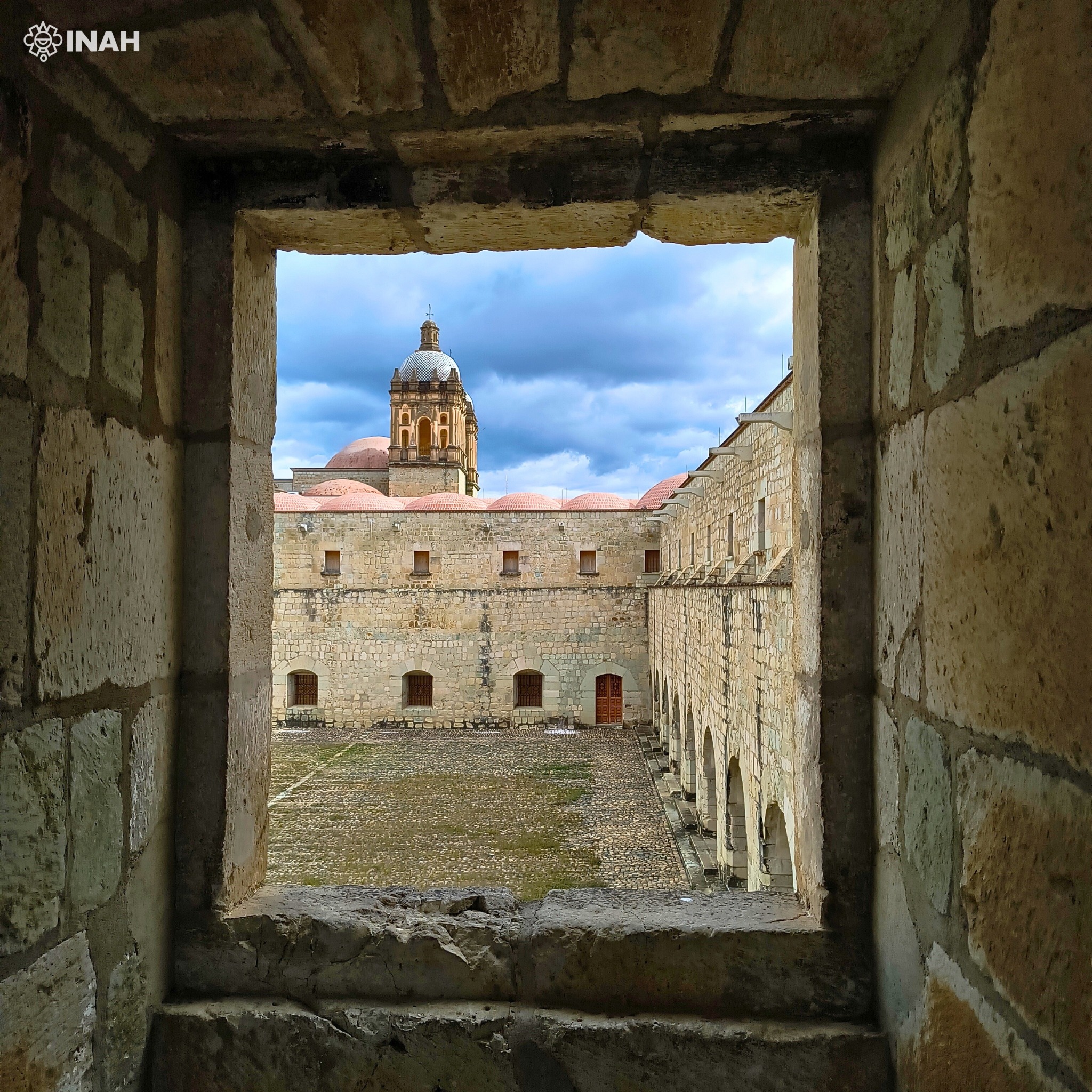

Territory where time is captured in walls, vaults, and courtyards that speak across centuries. In the heart of the city of Oaxaca, the former Convent of Santo Domingo de Guzmán (built by the Dominican Order, begun in 1575 and partially completed in the 18th century)is perhaps the purest expression of New Spanish Baroque: a decorated façade, exuberant interior ornamentation, altarpieces, cloisters, and chapels that still mark the cultural life of Oaxaca. Nearby, the Historical Archive shares open spaces, corridors, and courtyards with the community, reminding us that memory is not kept in silence, but in living architectural journeys.
But Oaxaca does not only look back. On the coast of Puerto Escondido, Casa Wabi, designed by Tadao Ando in collaboration with Bosco Sodi, imposes a contemporary minimalist style with Japanese influences: clean lines, bold use of concrete, integration with the landscape, structural honesty. Similarly, the Teotitlán del Valle Community Cultural Center, designed by the firm PRODUCTORA (Carlos Bedoya, Wonne Ickx, Abel Perles, and Víctor Jaime), articulates community tradition and contemporary architecture: simple geometries, local materials, human scale, and design that honors the textile heritage of the population.
In the hotel industry, Oaxacan hospitality is reinventing itself through proposals that engage with local history and materials. Casona Sforza, designed by Alberto Kalach with Ezequiel Ayarza Sforza, celebrates vaults, traditional arches, local craftsmanship, and a contemporary bohemian aesthetic, renewing comfort without losing its roots. Pug Seal Oaxaca, located in a 19th-century mansion, was restored by Arquitectos Artesanos Oaxaca, with artistic interventions by Rafael Uriegas, Sabino Guisú, and Manuel Lozano, among others. It reflects an eclectic style that blends the historical, the Zapotec, and the contemporary through murals, inlays, and interior design.
From baroque convents to minimalist beachfront retreats, Oaxaca
demonstrates that its architecture is not static: it is a fabric in
constant transformation where the historical and the modern
come together to narrate the identity of a state.
And receive exclusive information to travel through Mexico in style!