
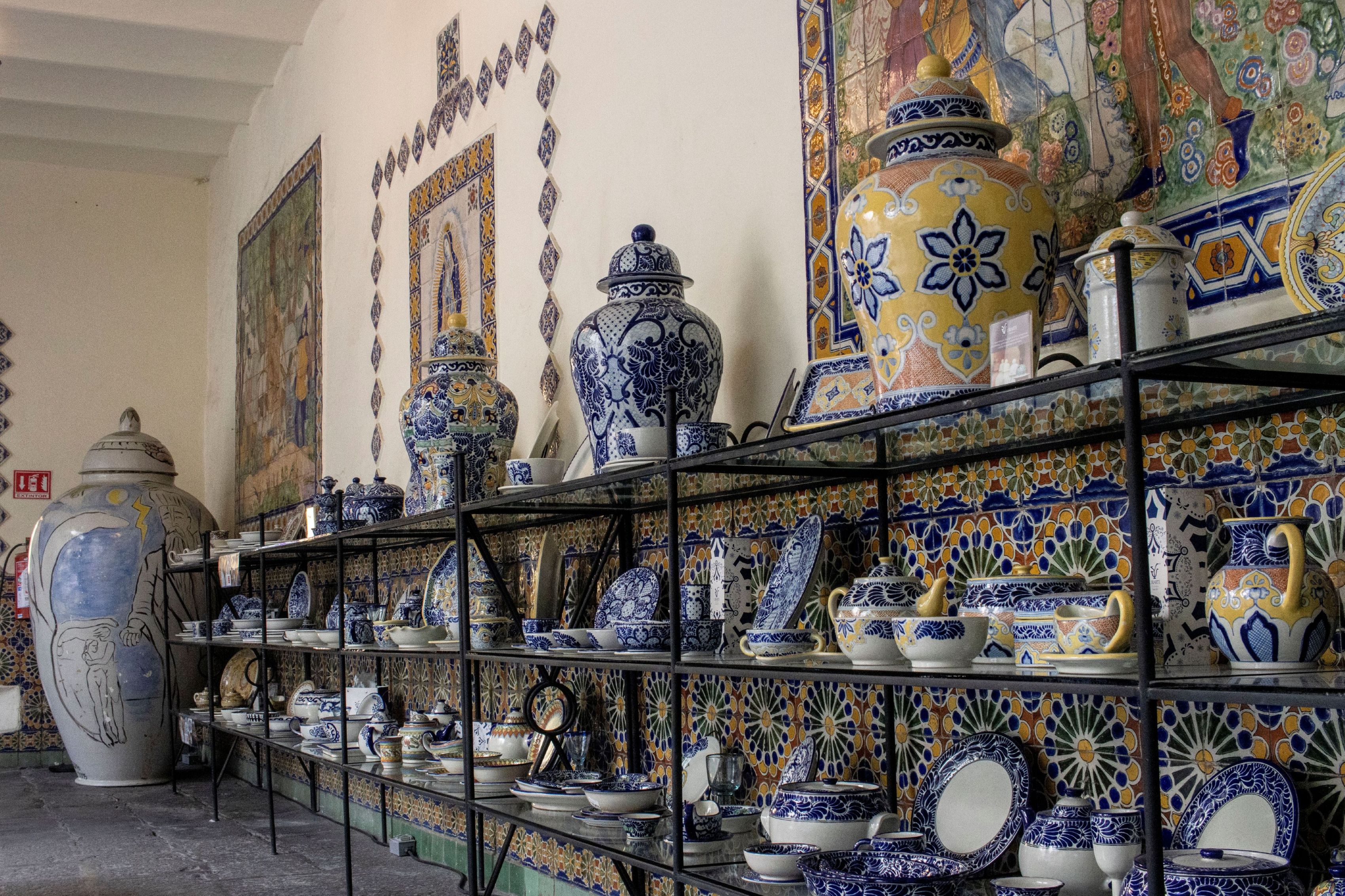

If Puebla could be represented by a single image, it would be the cobalt blue of Talavera pottery. On this symbolic map, Uriarte Talavera occupies a central place: in addition to being the oldest workshop in the country, it has been key in preserving the artisanal process, certified by the Designation of Origin and backed by the declaration of Intangible Cultural Heritage of Humanity (2019).
When asked how they have managed to keep the Talavera legacy alive while adapting to new generations, Mariana emphasizes the importance of sustained effort and raising the profile of the craft at key moments. The Designation of Origin in the 1990s and the UNESCO declaration in 2019 put the spotlight on this tradition. Internally, she explains, the historical weight of the workshop, its location in the Historic Center of Puebla, guided tours, and having a store in Mexico City have helped cultivate a loyal community of collectors and lovers of authentic ceramics..
As for what defines an authentic piece, she clarifies that it is not a single step, but rather a combination of factors: 100% natural clays from the region, pigments made in the workshop itself from mineral oxides, slow drying, two kilns, a characteristic glaze that adds shine, and paint applied with mule hair brushes. In her words: “Authentic Talavera is handmade from start to finish.”
On the balance between tradition and environmental responsibility, Mariana acknowledges that, while firing used to be done with coal and wood for over a week, today they use gas kilns that complete the process in approximately 12 hours. The biggest challenge, however, is waste: those pieces that do not pass quality control. To reduce waste, they have implemented the sale of scrap for architecture and upcycling projects— such as terrazzo with fragments, or collaborations in bronze and brass that transform pieces with aesthetic flaws into unique tables or lamps. They are also exploring the possibility of compacting fragments to manufacture building blocks.
When it comes to winning over younger audiences who still associate Talavera with tradition, her approach has been clear: collaborations with visual artists, architectural projects, and more contemporary designs, always without compromising the process. “Talavera can be extremely elegant in contemporary spaces,” she says.
Finally, Mariana sums up the legacy that Uriarte seeks
to leave behind: that the craft continues to exist, that
there are hands willing to produce it and people who
want to buy it. And, above all, that when someone
says “Uriarte,” they immediately think of Puebla and
Talavera as a living cultural identity
And receive exclusive information to travel through Mexico in style!