

For several years now, gastronomy has become one of the pillars of hospitality. In fact, in many destinations, cuisine is no longer seen as a complementary service but as a way of interpreting place and shaping experiences for travelers.
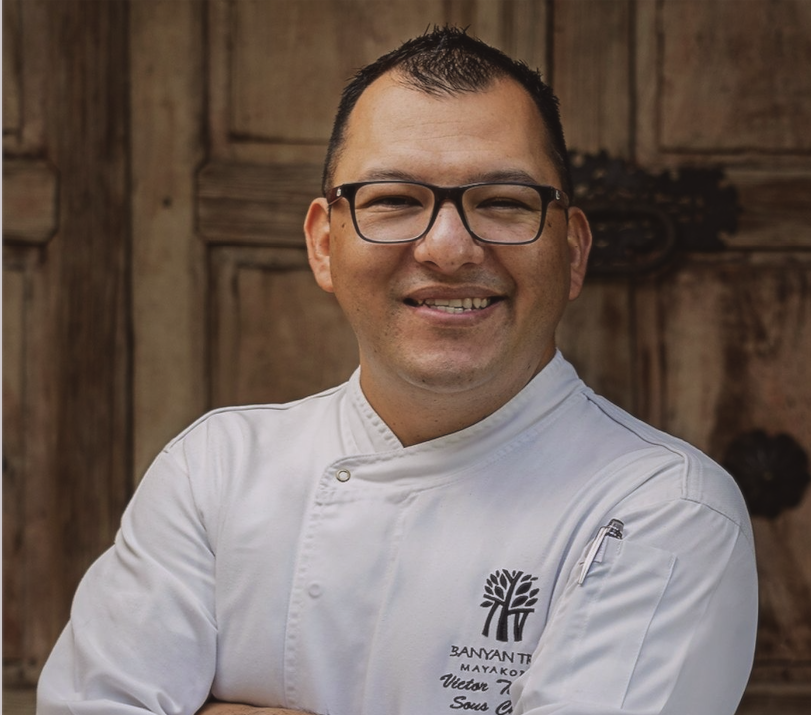
One example is Banyan Tree Mayakoba, which brings this concept to life through a culinary proposal that blends Mexican and Thai influences with a constant sensitivity to the surrounding environment of the Riviera Maya. At the helm of this operation is Víctor Tufiño, Director of Food, Beverage, and Culinary, who shares his perspective on the evolution of gastronomy in hospitality.
“Cuisine in luxury hotels has changed completely. It used to be part of the experience; today, it is often the main reason for travel. But beyond that, what has truly changed are guest expectations. Today, people want to understand what they are eating, not just enjoy it. They would like to know where the product comes from, what it represents, and why it is part of that culinary proposal,” says Víctor Tufiño.
How would you define your culinary style, and what influences have shaped your vision of cooking in a destination like the Riviera Maya?
My cuisine is rooted in respect—respect for the product, but also for the culture. Mexico has a very deep culinary identity, and the Riviera Maya has very specific ingredients and traditions. It is something you cannot approach without first understanding it. At the same time, working within Banyan Tree means engaging with a culture like Thai cuisine, which also has an obvious sensitivity toward balance, detail, and ingredients.
Gastronomy in luxury hotels is shifting toward more immersive, local, and narrative-driven concepts. How is this trend reflected in the development of new concepts, menus, or experiences within the resort?
It translates into being more conscious. Today we do not design experiences simply to make them visually striking, but to ensure they make sense within their setting. We aim for what is served at the table to maintain a genuine relationship with the surrounding environment.
We work extensively with local and seasonal products, but we also incorporate techniques and sensibilities from Asian culture, especially in the way we treat ingredients. Furthermore, we also strive to make the experience more approachable—less structured and more natural.
How does contemporary Mexican cuisine engage with the international culinary proposals sought by global travelers?
Today, Mexico has an obvious and distinct voice. It does not need to adapt to remain relevant. What matters is how it is presented. Global travelers have broad references, but they continue to seek authenticity. In our case, there is also an additional layer: the presence of Thai culture. That creates a different kind of dialogue, always rooted in respect for both traditions.
What lessons have been key in your career, and what trends do you believe will shape the future of gastronomy in hospitality?
Throughout my career, I have had the privilege of meeting many people, places, traditions, and cuisines. I firmly believe that the sum of all these experiences ultimately defines your leadership style and your understanding of gastronomy.
Learning techniques across different culinary styles is essential, but so is developing a profound understanding of flavor profiles, seasonality, and the principles of pairing. And of course, one must never forget the cooking of our grandmothers, because that is often where the essence of everything begins.
As for trends, I would say that healthy cuisine is more important than ever. Sustainability will continue to be a central pillar, along with sensory experiences and a return to more natural, less industrialized processes. From fermented waters for pairings to pickles, cured meats, and artisanal cheeses, the direction is clear: less can be more when it is guided by quality, technique, and respect for the product.
And receive exclusive information to travel through Mexico in style!